
Why Old Electronics Are Suddenly Cool Again
In a world of endless apps and notifications, simpler devices are winning people back.

The Landing Pad is a weekly newsletter about careers, growth, and the realities of modern work. Each week I share open roles, observations from my career in marketing, and a little encouragement for wherever you are in your journey.
Remember those days of early electronics? When listening to music on the go felt like a luxury, or holding a video game console in your hands completely blew your mind.
I remember being in the backseat of my parents car and holding my Game Boy above my head so I could see the screen from the headlights of cars behind me.
Well guess what. Something interesting is happening with electronics right now.
For the past thirty years the industry has moved almost entirely in one direction. Devices have become faster, more powerful, more connected, and more capable every year. Every new product promises to do more things. More apps, more features, more integration, and more ways to stay connected to the world around you.
And yet at the exact same time, a quiet counter trend has started to appear. If you spend a little time paying attention to certain corners of the internet, you’ll notice that people are rediscovering older devices. Devices that were simpler. Devices that were limited. Devices that really only did one thing.
The interesting part is that people aren’t returning to these devices because they dislike technology. If anything, most of the people gravitating toward them are the same people who love technology the most. What they seem to miss is not the old hardware itself, but the feeling of control that came with it.
One place where this trend shows up clearly is gaming. The original Nintendo Game Boy has quietly become cool again. Not just as a nostalgic object sitting on a shelf, but as an actual device people are actively using.
People are digging old ones out of drawers, buying them secondhand online, and restoring them back to life. There are entire communities dedicated to repairing them, upgrading the screens, or modifying them with modern components. What used to be a childhood device has become something closer to a hobbyist culture.
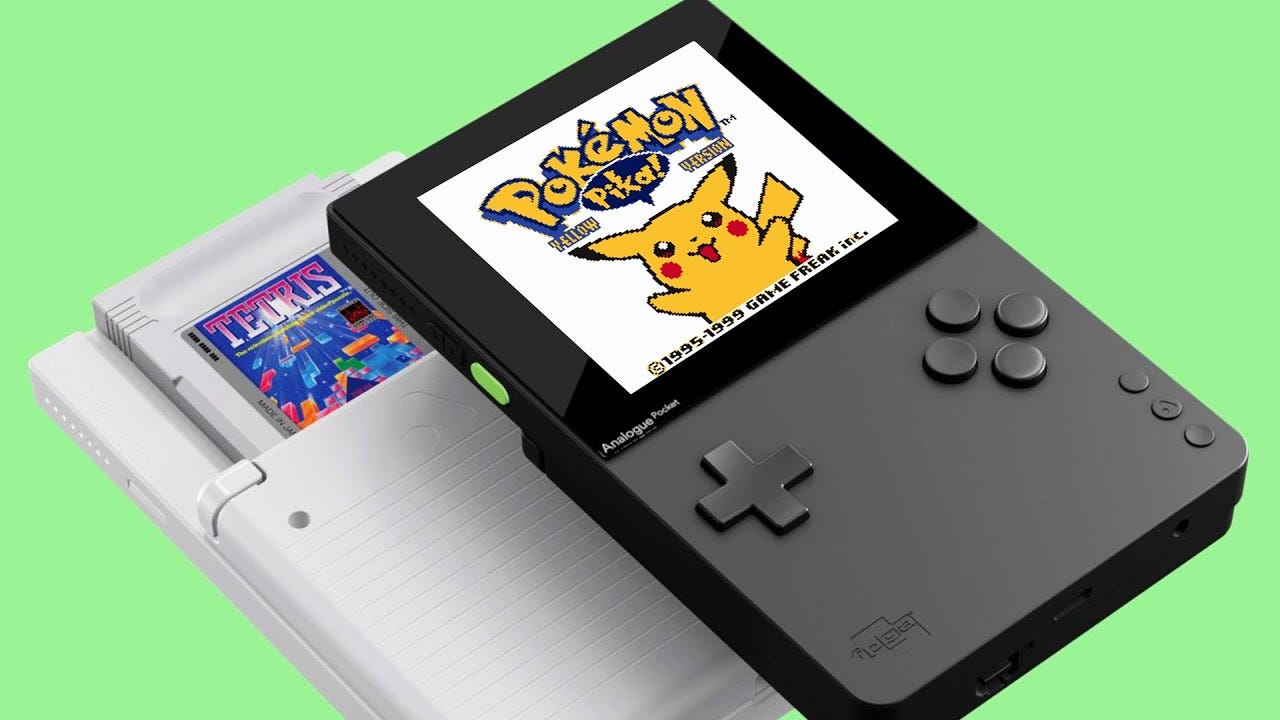
At the same time, new companies have emerged to meet that demand. One of the most interesting examples is Analogue, which builds modern versions of classic gaming systems. Their handheld device called the Analogue Pocket looks like a futuristic version of the Game Boy, but it still plays the original cartridges people used decades ago.
What’s fascinating about Game Boys and their resurgence is that they’re intentionally limited. They’re not trying to compete with a smartphone or become an all purpose entertainment hub. The experience is built around playing the game you inserted into the device, and when you turn the device off, the experience ends.
That limitation turns out to be the entire appeal. When someone sits down with a Game Boy, they’re simply playing a game. They’re not juggling notifications, responding to messages, or bouncing between different apps at the same time. The device does exactly what it was designed to do and nothing more.
You can see a very similar pattern emerging with cameras.
For years smartphones made standalone cameras feel unnecessary. The camera sitting in your pocket is faster, sharper, and more convenient than the point and shoot cameras people carried around in the early 2000s. From a purely technical standpoint, there’s almost no reason to use an older digital camera.
And yet people are doing exactly that.
Early digital cameras like the Canon PowerShot have suddenly become popular again. A few months ago my daughter asked me to buy her one and I thought she was making fun of me or something. I had to go online and get her one off eBay, and now she’s bringing it to parties, taking it on trips, and using it as her primary camera instead of her phone.
The appeal becomes clearer once you think about how the experience differs. When you take a photo with one of those cameras, you simply take the picture. There’s no editing process waiting for you immediately afterward, and there’s no social media platform sitting behind the camera encouraging you to post it instantly.
Instead, the photo simply exists.
Later you might plug the camera into your computer and see what you captured. Sometimes you’ll like the photos and sometimes you’ll hate them, but the moment itself is not immediately turned into content. It remains a memory first and a photograph second.

And just like with the Game Boy, companies are taking note. Manual has the Holo v2 for $100. A digital camera in cool colors built on tech from the late 90’s.
Music is going through a similar shift.
When Apple iPod disappeared it seemed like the natural conclusion to the smartphone era. Phones had absorbed everything. Cameras, calendars, maps, and music players had all collapsed into one device that we carry everywhere.
But culturally the iPod never really disappeared.
There are entire communities online dedicated to restoring them. People replace batteries, upgrade storage, and rebuild old models so they can keep using them. What started as nostalgia has quietly turned into something bigger. People are rediscovering what it felt like to actually own their music.
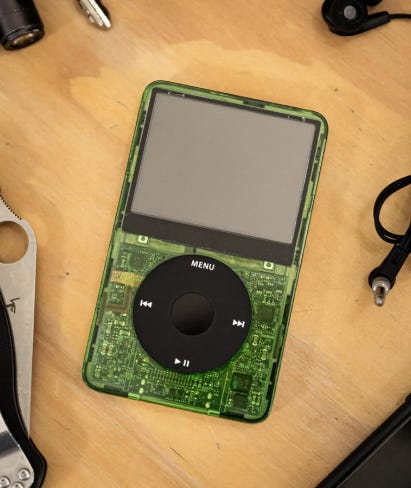
Part of the appeal comes from the relationship people had with their music libraries. When you used an iPod, the music on the device reflected the choices you had made over time. You bought albums, ripped CDs, downloaded tracks, and organized the songs you wanted to carry around with you.
The device became a small archive of your taste at that particular moment in your life.
Streaming changed that relationship completely. Today music is essentially infinite. You open an app and millions of songs are instantly available, often organized by playlists and recommendations generated by algorithms that analyze what you and millions of other listeners are playing.
The convenience is incredible, but the experience is different. Instead of building a personal library, you are often navigating an endless stream of recommendations that someone else designed.
Some people are starting to realize that those two experiences feel very different. People don’t want to feel like their music is controlled by an algorithm like TikTok. They want hands on selection.
This is the digital version of the record player.
That realization is part of the reason companies like Innioasis have started building modern versions of dedicated music players again. These devices are built around the same philosophy that made the iPod appealing in the first place. They exist to play the music you choose to put on them, without the distractions that come with a fully connected smartphone.
When you look at these trends together, something interesting begins to appear. The resurgence of these devices is often explained as nostalgia, but nostalgia is probably only part of the story. Most people aren’t returning to them because they believe technology was better decades ago.
What people seem to miss is the structure those older devices created.
Older technology had clear boundaries. A Game Boy played games. An iPod played music. A digital camera took photos. Each device had a specific purpose, and the interaction ended when you put the device down.
Modern devices behave very differently. They are often designed around engagement, with notifications, recommendations, and endless streams of content competing for attention. Instead of waiting to be used, they constantly attempt to pull you back in.
That difference creates a completely different relationship between people and their technology.
Older devices behaved more like tools. You picked them up when you wanted to use them and you put them away when you were finished. The interaction began when you decided to start it and ended when you decided it was over.
That small shift in control turns out to be surprisingly meaningful.
The renewed interest in these older devices may not really be about retro aesthetics at all. It may simply reflect a growing desire to interact with technology that respects our attention rather than constantly competing for it.
In a world where nearly every product is designed to capture as much attention as possible, the most valuable feature a device might offer is restraint. The ability to do exactly what it was designed to do and then quietly get out of the way.
justin


